

Aspire Impact & Evidence
1. Programme Overview
Aspire Foundation’s Family Support service provides early, targeted, and holistic support for families with children aged 0–11 across Cheltenham and Tewkesbury. Our work focuses on strengthening family relationships, improving children’s developmental outcomes, and ensuring that parents feel confident, supported, and equipped to meet their child’s needs.
We deliver structured, evidence‑informed interventions that address key areas of childhood development, including physical health, cognitive development, and social and emotional wellbeing. Our practitioners work with families in their homes, community settings, and Family Centres, ensuring support is accessible, relational, and tailored to each family’s needs.
To learn more about our programme, visit our Family Support Overview page.
Our Service Levels
Alongside our Targeted Family Support, Aspire Foundation also delivers Universal Support, which includes Early Intervention and Prevention activities. These consist of open‑access groups, parenting workshops, and community‑based support designed to identify emerging needs early and prevent escalation.
While Universal Support plays an important preventative role, our published evidence of impact focuses on Targeted Family Support, where we collect detailed demographic information, disaggregated data, and measurable outcomes.
Reach and Referrals (2025–2026)
In 2025–2026, we received 277 Targeted Family Support referrals across Cheltenham and Tewkesbury. This reflects strong and sustained demand for early help support across both localities.
-
Cheltenham: 131 referrals
-
Tewkesbury: 146 referrals
Referrals by Centre
Our referrals were distributed across local Family Centres as follows:
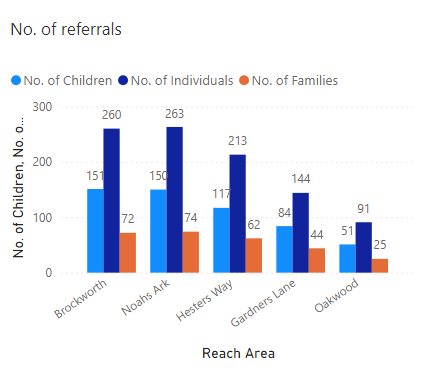
Referrals were distributed across our Family Centres, highlighting the differing levels of need and engagement across neighbourhoods. This pattern reflects both population density and the varying complexity of need in each area.
Referral Sources
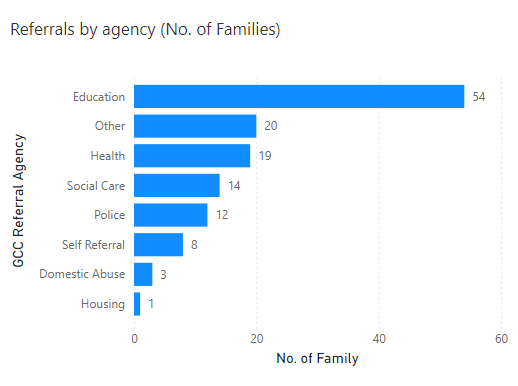
Our referral pathways demonstrate strong multi‑agency collaboration, with education and health partners continuing to identify and refer families at an early stage.
Cheltenham Referral Sources
Tewkesbury Referral Sources
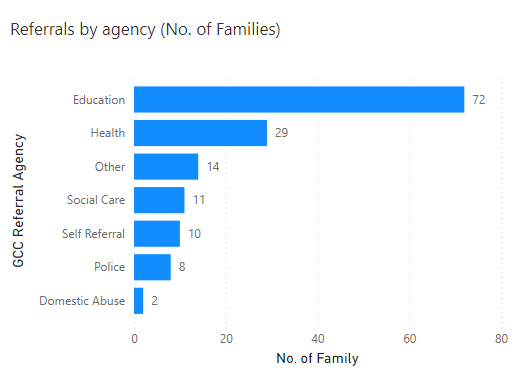
Education and health services remain the highest‑referring partners, reinforcing the strength of local relationships and shared responsibility for early intervention.
Family Closures and Outcomes
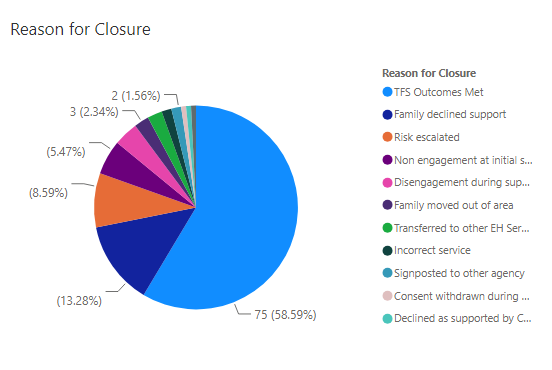
Families exit the service for a range of reasons. A significant proportion complete support with their goals met, demonstrating the effectiveness and consistency of our intervention model.
Cheltenham Closures
Tewkesbury Closures
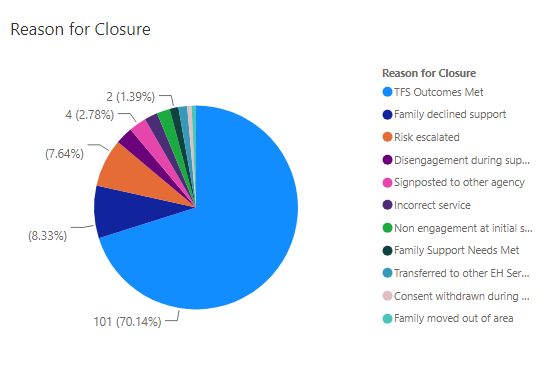
Across both localities, 176 families completed support with outcomes met, representing a strong indicator of programme impact and fidelity to our evidence‑based approach.
Operational data in this section is presented using our internal Cheltenham/Tewkesbury locality structure. Demographic data in the next section uses postcode‑based districts to ensure consistency with local authority datasets.
2. Who We Support: Demographic Profile
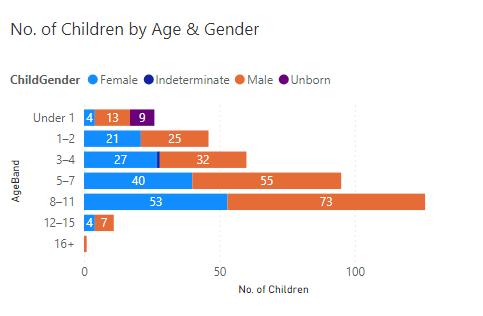
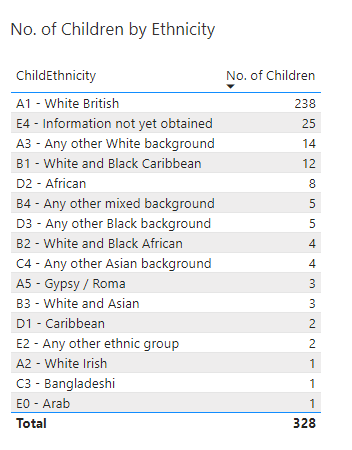
The demographic profile below represents a snapshot of the children and families we were actively supporting as of June 2026. Enhanced demographic fields were introduced part‑way through the year, so this analysis reflects our current caseload rather than a full‑year cohort. Demographic data is presented using postcode‑based district information to ensure consistency with local authority datasets.
Demographic Breakdown
The demographic profile below represents a snapshot of the families we were actively supporting as of June 2026.
Disaggregated Profile of Children Reached
 Ethnicity
 Income Deprivation Affecting Children Index (IDACI)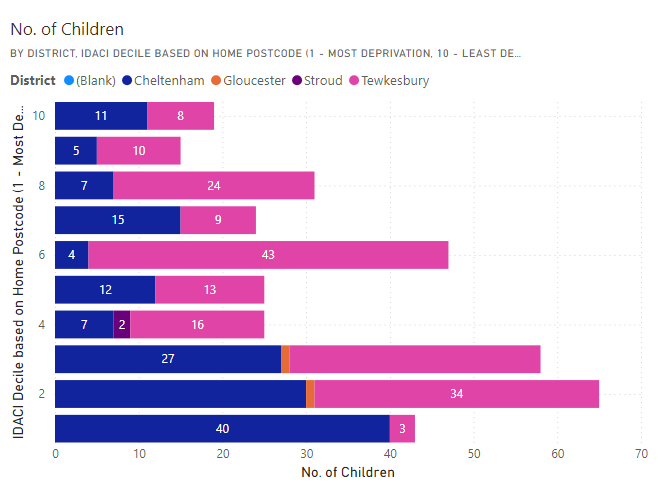
This demographic profile provides the basis for understanding who our service reaches. When read alongside the outcome data presented in Section 3, it enables interpretation of impact across a diverse population of children and families.
3. Our Impact: Outcomes for Children and Families
We measure progress using recognised tools, including the Outcome Star, alongside observational assessments and practitioner reports. Outcome Star data provides a structured way to understand the “distance travelled” by families during their engagement with Early Help services. This section summarises progress for all service users who completed both a baseline and a latest Star between 1 April 2025 and 31 March 2026.
Outcome Star results reflect 152 service users with active engagements during the year. Because not all families complete a full Star assessment, these findings represent the cohort with complete data rather than the entire caseload.
Overall Progress
The Outcome Star shows strong and consistent improvements across multiple areas of family functioning. The majority of families made measurable progress:
-
89% made progress in at least one outcome area
-
78% made progress in two or more outcome areas
-
72% made progress in three or more outcome areas
-
On average, families made progress in 4.1 outcome areas
These results demonstrate that most families experience meaningful positive change across several aspects of their lives during their time with Early Help.
Progress Across Outcome Areas
Progress is evident across all Outcome Star domains, although the level and nature of improvement varies by outcome area.
Strongest areas of progress were seen in:
- My children’s behaviour (66%)
- My children’s emotions (61%)
- How I feel (55%)
These areas reflect improvements in emotional wellbeing and family relationships, suggesting that Early Help support is effective in stabilising family environments and building resilience.
Moderate levels of progress were also observed in:
- Our family routine (45%)
- My children’s learning (42%)
- My children’s health (38%)
- Friends and community (33%)
- Keeping my children safe (30%)
In these areas, a combination of families making active progress and others maintaining positive outcomes indicates sustained improvements over time.
More complex areas of need showed lower levels of progress but higher rates of stability:
- Home and money (27%)
- Work (13%)
Notably, 64% of families maintained their position in relation to work, and 28% in home and money, suggesting that while progress may be slower in these structurally constrained areas, Early Help plays a key role in preventing decline.
Depth of Progress
In addition to the proportion of families improving, the scale of change was also significant.
-
The largest average improvements in Star readings were seen in:
-
Work (average +2.3)
-
Friends and community (average +2.3)
-
Keeping my children safe (average +2.0+)
-
This indicates that although fewer families make progress in some areas, those who do often experience substantial positive change.
-
Across most outcome areas, average improvements ranged between +1.6 and +1.9, demonstrating steady and meaningful progress rather than small incremental change.
Sustaining and Preventing Deterioration
A key strength of the service is its ability not only to support improvement but also to stabilise families and prevent worsening circumstances.
- In most outcome areas, between 18% and 40% of families maintained their position, reflecting sustained outcomes.
- Rates of regression (“dropping back”) were consistently low, generally between 3% and 9%.
Where families did experience setbacks:
- The largest decreases were seen in:
- Work (average -3.25)
- How I feel (higher proportion experiencing drops)
- However, these represent a small minority of cases and are often linked to external factors beyond immediate service control.
Summary of Impact
Overall, the data demonstrates that Early Help services:
- Enable meaningful progress across multiple domains of family life
- Deliver strongest impact in emotional wellbeing, behaviour, and relationships
- Help families sustain positive outcomes even where progress is harder to achieve
- Provide a protective effect, limiting deterioration in complex areas such as employment and financial stability
This combination of breadth (multiple outcomes improved), depth (significant score increases), and stability (low regression) evidences a service that is both effective and resilient in supporting children and families with varying levels of need.
Disaggregated Outcomes
Outcome Star data provides robust evidence of impact by measuring change across key areas of family functioning, including emotional wellbeing, child development and safety. However, Outcome Star assessments are not currently disaggregated by demographic characteristics such as age, ethnicity or gender within the reporting tool itself.
To ensure transparency about who the service reaches, we publish disaggregated demographic data (Section 2), including breakdowns by characteristics such as ethnicity and local deprivation (IDACI). This enables our outcomes data to be interpreted in the context of the populations we serve.
The cohort of 152 service users included in this Outcome Star analysis is broadly representative of the wider Early Help caseload. This provides confidence that the positive outcomes demonstrated — including improvements in children’s emotional wellbeing, behaviour and learning — are being achieved across a diverse range of families.
Taken together, our published data shows:
- Who we reach (through disaggregated demographic data)
- What difference we make (through validated Outcome Star progress measures)
This combined approach provides a clear and credible picture of impact across the communities we serve.
Our model is grounded in evidence‑informed practice, and delivery is monitored through supervision and quality assurance to ensure interventions are implemented consistently and appropriately for families with different needs and backgrounds.
These outcomes are achieved across a demographically diverse population, as shown in Section 2, demonstrating impact across different communities and levels of need.
4. Case Studies
Our case studies illustrate the real‑life impact of our work on children and families. Each story is anonymised.
Case Study 1: A Family Finding Stability and Confidence Together
When the school reached out for support, they were worried. After the summer holidays, the youngest child’s behaviour had changed dramatically. He was struggling both in class and at home, and the impact was being felt across the whole family. With two boys and separated parents trying their best to manage the challenges, the school knew the family needed coordinated help — not just for the children, but for the adults too.
The Family Support Worker (FSW) began by listening. Through early conversations and assessment, it became clear that both parents wanted the same thing: for their boys to feel settled, understood, and supported. But parenting across two households can be tough, and the family needed guidance to create consistency, reduce conflict, and help the children feel secure.
A Team Around the Family (TAF) meeting brought everyone together, parents, the school, and the mentor, to agree on a shared plan. Each professional took on a role, ensuring the family didn’t feel overwhelmed or alone. The plan included parenting support, emotional wellbeing work for the children, and practical activities to help them feel more confident and connected.
Support quickly began to take shape. One child was referred to Young Carers, recognising the responsibilities he carried at home. The younger child was offered play therapy, giving him a safe space to explore his feelings. The older child received mentoring, helping him build resilience and confidence. Both boys also attended Move More Stay and Play sessions and holiday clubs, giving them positive experiences outside the home.
Meanwhile, the parents engaged in targeted work around co‑parenting, communication, and the impact of parental conflict. They committed to creating consistent boundaries and routines across both homes, a change that made a noticeable difference to the boys.
As the weeks went on, the family began to feel the benefits. The parents reported feeling more confident and better able to communicate with each other. The boys said they enjoyed their sessions with the FSW, and the younger child spoke positively about his play therapy. Most importantly, both children were learning to manage their emotions more effectively, and the school began to see improvements.
The family also became part of the local community through Hesters Way Children’s Centre, where they accessed universal provision and felt welcomed and supported.
The case remains open, with ongoing work around co‑parenting and emotional wellbeing, but the family is now on a much stronger path. With the right support, they have begun to rebuild stability, confidence, and connection, and the children are thriving as a result.
This case demonstrates measurable improvements in children’s social and emotional development, alongside strengthened parental capacity and more stable family relationships.
Case Study 2: Supporting a Family to Understand and Meet Their Child’s Needs
The family self‑referred for support, seeking guidance in managing their child’s behaviour, routines, and engagement with school. At the time of referral, the parent reported feeling unsure about how to respond to their child’s needs and lacked clarity about the support the child was receiving in school. This uncertainty was contributing to challenges at home, alongside wider concerns relating to housing and stability.
The Family Support Worker (FSW) began by working closely with the parent to understand their concerns and build a clear picture of the child’s needs. Early on, it became evident that there was limited communication between home and school, and no clear plan in place to support the child’s additional needs. At this stage, the school did not have a SENCO in post, which further contributed to the lack of clarity.
A coordinated plan was quickly established. The FSW supported the parent to re‑engage with the school, facilitating communication and helping them understand both the child’s needs and the processes involved in securing appropriate support. This included guidance through the Education, Health and Care Plan (EHCP) process.
Parenting sessions were delivered, focusing on behaviour management, emotional understanding, and the development of consistent routines. These sessions helped the parent to better interpret their child’s behaviour and respond in ways that supported emotional regulation and stability within the home.
A Team Around the Family (TAF) approach ensured that all relevant professionals were involved and working together. Support extended beyond education, including assistance with housing needs and signposting to SENDIASS for ongoing specialist advice and advocacy.
As support progressed, significant changes began to emerge. The family is now actively engaging with the school and has developed a stronger relationship with education staff, including the SENCO. The child has since received an EHCP and is awaiting a specialist school placement panel, ensuring that future provision will more closely meet their needs.
The child has also been referred for Speech and Language Therapy, and further health assessment is being progressed with input from the GP and referral to a paediatrician. These steps are providing a more comprehensive understanding of the child’s developmental needs and ensuring that appropriate interventions are in place.
At home, the parent reports increased confidence in managing behaviour and a greater understanding of their child’s needs. This has led to more consistent routines and a calmer home environment. The family’s housing situation has also improved, with successful re‑banding supporting access to more suitable accommodation.
Positive changes are also evident in the child’s development and wellbeing. School reports that the child is settled, able to follow instructions, and no longer presents behavioural concerns within the classroom. The child has begun to form friendships and can now work alongside peers at a similar developmental stage. While progress in learning is gradual, the child is making steady improvements with the right support in place.
Outcome Star assessments reflect this progress, with improvements recorded across five key areas: children’s health, children’s emotions, children’s learning, children’s behaviour, and home and money.
Overall, this case demonstrates how coordinated, evidence‑informed early help can significantly improve both parental capacity and child outcomes. Through strengthened relationships, improved understanding, and access to the right support systems, the family is now better equipped to support their child’s ongoing development and wellbeing, particularly in relation to social and emotional development and early learning.
Case Study 3: Reducing Parental Conflict and Strengthening Safety for Children
The family were referred to Early Help following police involvement at a handover between parents, where conflict escalated and raised concerns about the children’s exposure to ongoing parental disputes. The children, aged 7 and 9, had a long history of involvement with Children’s Social Care, including previous concerns relating to domestic abuse, emotional harm, and parental mental health.
A Child Arrangements Order (CAO) was already in place, with the children living with their father and having supervised contact with their mother. However, continued incidents and concerns highlighted that the children remained at risk of exposure to conflict, emotional distress, and instability.
The Family Support Worker (FSW) undertook a detailed assessment to understand the impact of these experiences on the children. Direct work was carried out with both children, ensuring their voices were heard and their lived experiences were clearly understood and shared with the wider professional network and both parents.
A coordinated, multi‑agency approach was put in place, involving school, health services, and wider support agencies. Parenting support was offered to both parents, focusing on understanding the impact of conflict on children and promoting more positive and safe interactions.
Clear safety planning was implemented, particularly around arrangements for contact and handovers. This included strengthening supervision arrangements and setting clear expectations to prevent escalation of conflict. Crucially, steps were taken to ensure that parents did not have direct contact with each other, significantly reducing the risk of further incidents.
Support was also extended to address wider family needs. The mother was supported to access mental health services through her GP, including a medication review and psychiatric assessment. The father was provided with advice and support around employment opportunities, while both parents were supported to access appropriate financial entitlements.
The children were supported both directly and through school. The eldest child engaged with Talk Well support to explore emotional wellbeing and identify areas where they needed additional help. School continued to monitor and support both children through ongoing plans to ensure their needs were being met in a safe and consistent environment.
As a result of this coordinated intervention, significant improvements have been achieved. Both parents now have a clearer understanding of the impact of parental conflict on their children, and measures put in place have reduced the children’s exposure to harmful situations. The structured and supervised contact arrangements are now consistent, providing the children with a greater sense of stability and predictability.
The children report feeling listened to and that their views have been taken seriously. This has been shared across the professional network and with both parents, ensuring that their needs remain central to planning.
There are also positive indicators in relation to parental wellbeing and stability. The mother is actively engaging with mental health support, and both parents are accessing appropriate financial and employment advice. These changes contribute to a more stable and supportive environment for the children.
Outcome Star assessments completed at the beginning and end of the intervention demonstrate measurable progress across key areas, reflecting improvements in emotional wellbeing, family relationships, and stability within the home environment.
Feedback from the family highlights the quality of the support provided. The parent noted that the service was “really helpful” and valued that support was provided at the right time. The Family Support Worker was described as respectful, with particular appreciation for how they engaged with the family and their home environment, helping to build trust and a positive working relationship.
Overall, this case demonstrates how structured early help intervention, combined with strong multi‑agency working and clear safety planning, can reduce risk, improve family stability, and support children’s social and emotional development, particularly in the context of high parental conflict and complex family histories.
These stories bring our data to life and demonstrate the depth of change experienced by families.
5. Our Evidence‑Based Approach & Fidelity
Aspire Foundation’s Family Support service is grounded in well‑established evidence on what improves outcomes for children and families, particularly in the early years. Our approach is informed by key principles including early intervention, whole‑family working, strengths‑based practice, and relational support.
These approaches are widely recognised as effective in improving children’s social and emotional development, strengthening parent‑child relationships, and supporting long‑term wellbeing.
Evidence‑Informed Practice
Our delivery model draws on:
- Early intervention frameworks, which emphasise timely support to prevent escalation of need
- Whole‑family approaches, recognising the interdependence between parent wellbeing and child outcomes
- Strengths‑based practice, which builds capability, resilience, and confidence within families
- Relational practice, which prioritises trust, consistency, and sustained engagement
These principles are embedded across all stages of delivery, from referral and assessment through to intervention and review.
Structured Delivery Model
Support is delivered through a consistent and structured process:
-
Assessment
Families complete an Outcome Star assessment alongside practitioner observation to identify strengths and areas for development. -
Planning
A tailored support plan is developed collaboratively with the family, focusing on agreed goals linked to child development and family wellbeing. -
Intervention
Families receive targeted support, including parenting guidance, emotional wellbeing support, and practical interventions delivered in home and community settings. -
Review and Progress Measurement
Progress is reviewed regularly using Outcome Star reassessment and practitioner evaluation, ensuring that support remains focused and responsive.
This structured model ensures that support is delivered consistently while remaining responsive to individual family needs.
Ensuring Fidelity and Consistency
We maintain fidelity to our evidence‑based approach through:
- Use of recognised tools, including Outcome Star, to guide assessment and measure outcomes
- Regular supervision and case review, ensuring consistency in practice and decision‑making
- Quality assurance processes, including oversight of assessments, plans, and recorded outcomes
- Workforce development and training, ensuring practitioners are skilled in delivering evidence‑informed interventions
- Multi‑agency working, aligning support with education, health, and community partners
Together, these mechanisms ensure that our model is delivered as intended, with consistency and quality across all families.
Responsive and Contextualised Delivery
While our approach is structured and evidence‑based, it is also responsive to the communities we serve. Support is tailored to reflect each family’s circumstances, culture, and strengths, ensuring that adaptations enhance engagement and effectiveness without compromising the integrity of the model.
Cultural and Community Adaptations
Taken together, this evidence demonstrates that Aspire Foundation delivers a consistent, evidence‑informed service that achieves measurable improvements in children’s development and family wellbeing across a diverse population.